Sunday, March 1, 2009

What? Environmentalism isn't dead!

As I sit here reading "The Death of Environmentalism: Global Warming Politics in a Post-Environmental World," I can't help but ponder the irony of this article's meaning in my own life.  The professors of this class have posted each week's readings online so as not to waste paper, especially in the spirit of the human/nature element of the class.  However, I think I can safely say all the students inevitably end up printing the readings anyway because it is easier to read them on the train, make notes in the margins, underline sentences, etc. (not to mention one of the readings was scanned sideways at a 90 degree angle, thus making it quite difficult to read without printing it).  The sad part is that when the students are each printing the articles and essays, they only get printed one-sided on the xerox/phaser printer, whereas if the articles were scanned using a copy machine, they could be printed double-sided, saving the school money and the environment several trees.  To me, this scenario is much like environmentalism today: it comes with the best intentions, but in reality it just doesn't pan out.

THE-DEATH-OF-ENVIRONMENTALISM. The fact that environmentalism looks really good on paper, but can't seem to make any headway standing up to conservative politics was the biggest challenge environmentalists were facing when this article was released back in 2004 (reading this article felt like I was reading yesterday's news).  Since the article's release, we have trudged through the rest of George W. Bush's 8-year term and are now entering a new wave of liberal politics spearheaded by President Barack Obama.  Obama has already tapped into the article's suggestion to creatively propose 'environmental' solutions by appealing to multiple interests, such as the CAFE amendment did for both the auto industry and the environment.  Today's hot topic is "green jobs" which combine the goals of environmentalism with career opportunities.  Obama has recently announced $20 billion will be invested in a cleaner, greener economy and $50 million will go toward green job training, spawning industries and creating jobs that we don't have now.  This is really exciting, and exactly what the article predicted was necessary for a "third-wave" environmentalism (framed around investment).

But what are some of the other stumbling blocks for this third-wave environmentalism?  In my opinion it's the American people.  Despite the recent Democratic shift, for the last 25 years the U.S. has been in a conservative direction, thus rational logic will not work to convince everyone.  The article clearly states that environmentalists need to appeal to the collective self-interest of the American core values; someone quick find a passage in the Bible that says the rainforest is holy!
Many people are skeptical of science, mostly because science is usually hard to understand and religion causes them to become leery of scientific thought.  They question scientific discoveries.  Case in point the Creation Museum in Kentucky.  Give people statistical-based facts and watch their eyes glaze over.  The article states, "Environmentalists need to tap into the creative worlds of myth-making, even religion... to figure out who we are and who we need to be."  Does anyone have any insight as to how this can be accomplished?  I suppose the only good way is to combine the issues: health care, taxes, auto industry, jobs, and other big issues.

Eliot Porter, Luna Moth 1953

So... back to the image part of human/nature/image, how do we as artists impart environmental change?  It seems obvious after reading "Every Corner is Alive" about Eliot Porter's nature photography that Porter's tactics aren't nearly valid in today's society.  As the article states toward the end, the influence of Porter's pictures from the 1960s has changed over time.  Nature photography today is photoshopped, pristine, and flawless, showing cliches where Porter once pioneered a photographic genre that was environmentally concerned for the land all its inhabitants.  So now that we know perfect untouched nature doesn't scare people into environmentalism, what about scary images?  Sure, Martin Luther King Jr said, "I have a dream" not "I have a nightmare," but perhaps a little Burtynsky might instill some complexity into the issue.  
Edward Burtynsky, Oxford Tire Pile No. 1, 1999

Edward Burtynsky, Nickel Tailings No. 32, 1996 

But what do we do now that we live in a society so completely entrenched in photographs?  Is it possible for nature photography to impart change?  Can it still have aesthetic means for a political end?  I think perhaps on a small scale it's possible, but not just in regards to photography.  Take for example Brian Collier's "Pika Alarm" displayed in Lucy Lippard's "Weather Report" exhibition.  Collier mounted a motion-activated speaker atop a pole that emitted the pika's singular high pitched cry when someone would approach or pass by.  A help-yourself postcard describes the small rabbit-like creature's struggle as possibly becoming the first known animal to become extinct from global warming.  It's small, cute, and has a message.
a pika

On a side note, two weeks ago I went to the film screening of Empty Oceans, Empty Nets.  Now, let me first preface with the fact that I love eating seafood and was not expecting to walk away from the film feeling horribly guilty about this.  Anyway, after seeing the film I learned all the graphic details of overfishing and aqua-culture and how fish stocks are depleted to the point where the fish can't recover.  An especially destructive method of fishing called bottom trawling uses nets that scrape across the bottom of the ocean floor, destroying important plantlife and reefs where fish feed and breed, not to mention that it catches all sorts of other sealife like sharks and turtles that aren't meant to be caught.  It's important that people eat fish caught from sustainable fisheries.  The Monterey Bay Aquarium's Seafood Watch Program is designed to keep consumers in the loop as to the "greenest" seafood to buy and which to avoid.
Orange roughy- endangered but still being fished

My point of bringing this up in my blog is how was I to know any of this information if I didn't seek it out myself?  I never thought overfishing was such a colossal problem.  I mean, when people go to the grocery store to buy swordfish, bluefin tuna, or orange roughy there's no label on the package that states "overfished and nearly endangered."  How can we blame consumers for being so naive when this information seems practically hidden??  I think these hidden pitfalls of blind consumerism for many Americans are soon coming to an end.

Monday, February 23, 2009

Why all the seagull hate?


"Dreyfus once wrote from Devil's Island that he would see the most glorious birds.  Many years later in Brittany he realized they had only been seagulls... For me they will always be glorious birds."  

This quote comes from the 1971 film "Harold and Maude," where the two main characters are watching the sun set and seagulls flying overhead.   When Harold looks down and notices the concentration camp tattoo on Maude's arm, she proceeds to say the above quote, speaking of Dreyfus' imprisonment and using the seagulls as a symbol for freedom (further enhanced by the Cat Stevens song playing in the background about being free).  

I was reminded of this scene after reading "A Bird Tapestry" by David S. Rubin, an article that details the use of birds as metaphors and expressions of conceptual impulses in art.  Rubin describes several artists who use birds in their art pieces as a means of understanding people's relationship to their flying counterparts.  After reading the article, I noticed there was no mention of art that specifically dealt with birds from the gull family.  A few artists worked exclusively with pigeons, but what of the seagull?  I decided to take my inquiries to the next step.

To me, it only makes sense that artists gather inspiration from seagulls since they have many characteristics similar to that of humans.  For example, seagulls are an omnipresent bird, found on the shores of most every continent around the world, easily able to adapt to any given environment, especially environments containing humans.  I would also label humans as omnipresent, widespread and able to thrive and adapt anywhere on earth, but generally found near bodies of water.  Secondly, seagulls are omnivores, able to eat most anything they are presented with, from Tangy Cheese Doritos to insects and small rodents.  Humans are also omnivores, able to consume most any variety of food and food products.  Thirdly, Gulls mimic the behavior of their fellow gulls, sleeping with one eye open in order to assess if the surrounding group is agitated and ready to take flight, like an alert system.  Humans also pay attention to their peers, perhaps not because of potential predators, but to assess their social and physical interactions.  Even more so than the literal similarities, I love seagulls for the nostalgic feeling I get when I hear their high pitched squawking calls, immediately reminding me of being at the ocean, a naturalistic emotion found in many humans.

So why all the seagull hate?  Probably because gulls are scavengers and will go "klepto" on your beach food.  They slowly creep in, then suddenly they are swarming and there's a horrid flapping above your head and before you know it your fish n' chips are gone.  There's even an Internet game When Seagulls Attack, where the objective is to dodge the dive-bombing gulls.  Gulls are so often despised and thought of as a nuisance pest, akin to a rat or a pigeon.  In the animated film "Finding Nemo," the seagulls are portrayed as greedy little annoyances, further emphasized by their wailing call that, when applied to the English language, is interpreted as "mine mine mine mine."  At one point a pelican even refers to them as "rats with wings."
Seagulls from "Finding Nemo"

American Artist Mark Dion recognizes this widespread seagull hate and strives to correct these adverse feelings with his Mobile Gull Appreciation Unit.  This giant seagull-shaped booth on wheels was a part of the 2008 Folkestone Triennial in England.  This unwieldy vehicle is a nature-awareness station as much as it is an artwork, dispensing information about the local Folkestone gull, seeking to foster a greater love for the misunderstood bird.  Dion's Gull moved throughout town during the course of the exhibition.
Mark Dion's Mobile Gull Appreciation Unit 2008

In a 2009 exhibition at the Cornell Lab of Ornithology called "Gulls, Terns, and Skinners," painter Ben Shattuch portrays the birds he observed while working at Cornell's Shoals Marine Laboratory in Maine.  He uses thick expressive strokes of oil paint that portray the birds in mid motion behaviors.
Ben Shattuch Herring Gull 2008

In another 2009 exhibition at the University of Rhode Island Library Gallery called "Gulls Gone Wild," Jon Campbell uses paintings from famous artists in history and replaces the humans in the image with gulls.  He is humanizing the seagulls, not only making their status equal to that of humans but also calling into question the validity of these famous art paintings.
Gull with a Pearl Earring

Van Gull

Block Island Gothic

Another example of humanizing gulls can be seen in Derek Doublin's video piece entitled "The Seagull."  
This piece first shows two young men joking about how dumb seagulls are and imitating seagull bird behavior.  In the end, for one of the men, the human and seagull behaviors merge and the man unexpectedly flies into the sky the way a real seagull would.

I am relieved I was able to find art pieces that concentrate on the positive aspects of seagulls instead of the popular bird-brain mentality so affluent in our culture and perpetuated in "Finding Nemo."  In fact, according to Wikipedia, gulls are "resourceful, inquisitive, and highly intelligent birds, demonstrating complex methods of communication and a highly developed social structure."  I was even surprised to find a few artists that humanized them (or better yet birdified us), emphasizing that there are deep connections between us and our flying gull counterparts.

Monday, February 16, 2009

Biophilia-our bipolar emotions toward nature

In the The Biophilia Hypothesis, Edward O. Wilson states that biophilia is the innately emotional affiliation of human beings to other living organisms.  It is a "complex of learning rules" that has evolved over hundreds of thousands of years ago when humans first originated. Since humans have always been intimately involved with other organisms, the brain evolved in a biocentric world, not a machine-regulated world.  Stephen R. Kellert further argues it is because of this biocentric evolution that humans have developed nine universal expressions of affiliating with the natural world: utilitarian, naturalistic, ecologistic-scientific, aesthetic, symbolic, humanistic, moralistic, dominionistic, and negativistic. 
The naturalistic tendency amongst humans, particularly myself, can be evidenced by visiting the landscape of the beach.  The satisfaction derived from the direct contact with nature, in this case the ocean or lake and it's conjoined land culture, can be breathtaking, relaxing, and healing.   French photographer Christian Chaize became entranced with a small stretch of coastline in southern Portugal while vacationing there in 2004.  He photographed it extensively in an attempt to understand "the ineffable draw of its inviting and mysterious landscape."  A key component in his photographers are the beach-goers who also share in the awe and excitement of this landscape.

A humanistic approach to nature is an aspect that Colleen Plumb happens to be keenly aware of.  Her photos are a constant reminder that humans are deeply connected to nature and often try to express this sentiment in our love for animals.  People often "humanize" nature by domesticating animals, transforming them into little companions.  Although resulting in therapeutic mental and physical benefits for the human, for animals such as birds, often results in a cage as a permanent dwelling.

These individuals who are crying over dead trees are expressing their moralistic affiliation to nature.  They are experiencing a deep attachment to the wilderness and feel the need to openly mourn the loss of a tree.  Their affinity and reverence toward nature results in an shared ethical commitment to preserving and helping the land, although one might question whether screaming in the forest is really a pro-active response.

Speaking of pro-active responses, although I learned much from Wilson and Kellert's statements about biophilia and the relationships humans have with nature, the end of chapter 2 ended on a rather vague note.  The last section in ch. 2 entitled "A New Basis for Conservation?" should have laid out a better plan for how we can use biophilia for conservation efforts (which itself is a nondescript word).  Instead, Kellert reiterates the importance of the recognition of the basic human dependence on nature, and ends the chapter criticizing humans' inability to see this dependency, thus forecasting "the contemporary drift toward massive biological impoverishment and environmental destruction."  

In J. Malcolm Shick's article "Toward an Aesthetic Marine Biology," Shick emphasizes the importance of analyzing marine biology within its wider aesthetic and historical context, "using this material to reinforce various marine-biological facts and concepts by associating them with memorable visual images or literary or musical passages."  I was amazed with shick's ability to connect a broad range of artists from Shakespeare to Matisse to the aesthetic value of marine biology.  I discovered a contemporary artist Tiffany Bozic who, in 2007, visually interpreted the California Academy of Science's vast marine invertebrate as part of their exhibit "From the Depths."  The year-long collaboration depicts deep sea creatures that are more imaginary than faithfully mimetic, going beyond a simple description of her biological subjects.

Monday, February 9, 2009

Transgenic art: hallucinations come alive

In Evelyn Fox Keller's article entitled  "The Biological Gaze," she discusses the ways in which the gaze or the act of looking at something can transform into actual touching.  A form of literal material transgression.  She claims that looking with the naked eye is not as innocent as it may seem, for it is also an intrusive act.  Keller gives examples of early science breakthroughs such as the microscope and x-ray to examine how these technologies have changed the meaning of "seeing." 
In the early days of the microscope, people often did not have much interaction with the object being examined under the lens.  It was a relatively passive event and people were unable to touch the microscopic reality, questioning if they were even seeing anything at all.  It wasn't until the study of embryology that scientists were able to intervene with the microscopic image, injecting organisms with micropipettes armed with cells from another orgamism, which led to the production of transgenic organisms.  The term "armed with a microscope" seemed to take on whole new meaning.

Amy Ross's paintings pose the question: what would happen if the DNA sequence of a plant or mushroom were spliced with that of an animal?  She uses this idea of transgenic organisms to morph animals with branches, mushrooms, berries, and blossoms, thus creating implausible hybrid creatures.  She approaches the study of the natural world through the lens of genetic engineering and mutation gone awry.

The eye is not a purely passive instrument for the study of pristine nature.  There is an interdependence between the eye and the hand, and for Keller, technology is where the two merge, causing the acts of looking and touching to become undifferentiated and unified.  This concept of a biological gaze seems an interesting twist from the original feminist concept of "the male gaze," and the use of technology is what mainly separates the two ideas.  For Keller, science is an area of study that is often all about observing and gazing, similar to art, but in science the gaze can go much farther, inducing change and growth where there might not otherwise be.
Surrealist painter Remedios Varo blurs the lines between the human and the inhuman and the natural and the technological.  In this painting entitled "Creation of Birds," an owl/human hybrid is sitting at a desk creating birds using the moonlight and a magnifying glass.  Varo is showing her audience that artificial creation is something that can be mysterious and natural as well as scientific.

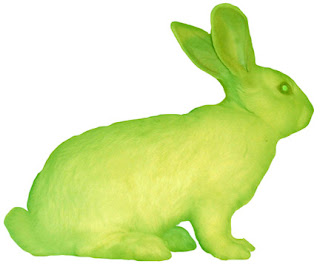
In George Gessert's article entitled "Art is Nature," he argues that most art today, from an ecological point of view, is approximately 140 years out-of-date.  Most contemporary artwork focuses on the human figure, artifacts, or technology, showing nature as distinct from humankind and art; a pre-Darwinian faith that humans are at the center of the universe.  He lists many artists who have overcome this roadblock, in particular Eduardo Kac, whose genetically engineered rabbit has become a transgenic art piece surpassing that of any two-dimensional picture.  Kac has used genetic engineering to transfer synthetic genes to a living creature, thus creating a green florescent bunny.  
This "art piece" bridges science and creativity to produce a whole new idea of transgenic art. Although this unnaturally glowing bunny automatically spurs a dialogue involving the ethical implications of genetic engineering, it also examines the ideas of normalcy, purity and hybridity.  Is this rabbit natural?  Probably no more natural than a hybrid fruit- e.g. plumcots, grapples, etc.

Monday, February 2, 2009

The natural human

This week's readings are "Nature" from The Dictionary of Human Ideas and Gary Snyder's "The Etiquette of Freedom."  Both articles analyze the definitions of nature, how differing definitions and thought processes on nature have evolved over the centuries, and how they apply to us as a culture today.  The Dictionary discusses nature in terms of four ideas that are supposedly in direct opposition to nature: supernatural, art, custom, and post-primitive.  One section of the article that stood out to me was the early philosophers' and intellectuals' theory of a "natural human" and if there was such a thing as a human being whose nature was yet "unspoiled by art."  Is it someone who lives as savagely as animals?  Or perhaps children are more in tune with an uncorrupted version of nature?  They also dabbled with the idea that peasants are perhaps more intimate with nature due to their innate honesty, sincerity, simplicity, and other outstanding virtues.  The early thinkers were searching for a type of person who was living in accordance to nature, but to me it seems their search was in vain.  It is impossible to find a life being lived in accordance to nature because nature in this context means "the world unmodified by man" and all humans live in a world that has been modified by man, instilled with differing sets of morals, virtues, and customs.

Snyder's article also touches on the idea that there is a dichotomy between the civilized and the wild.  He raises the status of the wild over that of the civilized by saying, "The lessons we learn from the wild become the etiquette of freedom."  He states that the etiquette of the wild world requires generosity, good-humored toughness, and appreciation of everyone's fragility, and modesty.  I agree with this statement, but I would argue that living in the wilderness and obtaining these qualities doesn't make someone any more a part of "living in accordance to nature."  To me, it has to do with a different statement that Snyder makes.  He states that wilderness is not limited to the two percent of formal federal and state parks, but that wilderness is everywhere and in everything, including our bodies.  Bodies are wild and self-regulating.  They don't need help breathing or functioning in the basic sense.  They are made to grow-up, procreate, grow old, and decay.  And in that sense human bodies are exactly like all animals and all things living, "according to nature."  

I have always been fascinated with this idea.  That our bodies are what connects us to the planet and everything living in it.  A few years ago I asked my friend who was in med school why I always have cold hands and feet.  I was under the impression that I had bad circulation or something, but she explained that most women have colder extremities because our body heat stays focused in the middle of our bodies to provide warmth for a growing fetus.  It was at this point that I realized that whether or not I decided to have children, that's what my body was designed to do and there's no getting around that.  

Upon further reflection on this idea of living the life of a "natural human," it is my conclusion that all human beings are living the life of a natural human simply given the wildness of our bodies and our dependence upon its natural functions.  There is no way that any one person or type of person can be living a life "in accordance to nature" more so than the rest of us.

Kiki Smith understands and responds to the human body's natural functions in her sculptures.


Alessandra Sanguinetti might argue that farmers are more in tune to living in accordance to nature.